Blog
AI or not to AI? A yoga perspective
1 October 2026
Sarena Mason
AI is on my mind…through the lens of the yamas – the ethical restraints that form the first limb of the yoga sutras of Patanjali (*)
Himsa – Asteya – Satya – Harm – Non-stealing – Truth
You may have seen the latest news warning against AI and how it is becoming an uncontrollable beast – or the purest of angelic forms depending on your news channel.
Perhaps this is something you’ve been watching and worrying about for a while?
Or perhaps you are someone who thinks it’s exaggerated?
Are you someone who struggles with dyslexia or another condition that makes reading and writing tricky, and using AI makes your life easier?
I have been reflecting on this through the lens of yoga, but also my own values and ethical approach to life. One mirrors the other, and I’m far from perfect.
If you’re not quite up to speed, AI has been hailed as the answer to most (if not all) of mankind’s problems. From helping us to write and edit blogs or articles (not this one!) marketing plans, resolving health issues, running banking Apps, creating images, automating manufacturing, creating scenarios to help prevent crises – or even creating scenarios that do create crises…
You may also be aware that the data centres needed to run AI are huge, use vast amounts of water, and take up acres and acres of land (that could/should be used for producing food in the UK.)
Now we hear how AI has gone rogue and is self-generating…well, all sorts of things.
Through the yoga lens and drawing on the philosophy of the yamas, AI is creating ‘himsa’ हिंसा i.e. harm. Harming the environment, people and nature. Harming people’s trust in each other – is it real, is it AI, what’s really going on here?
Then we have Asteya – अस्तेय – non-stealing. As an artist I am constantly seeing and hearing of artist’s work being copied and slightly altered via AI – then sold as someone else’s ‘original’ work. Bloody cheek!
Satya – सत्य – meaning truthfulness, but also not distorting reality through our behaviour.
I would add that the whole conversation around AI is creating ‘himsa’ to those that are genuinely finding using AI makes their life SO much easier. Criticism for using it – criticising for not…pitching one person against another…
There was a post on Facebook recently from a woman who argues for AI, explaining that due to difficulties she has, this tool is proving to be a life saver. I really feel for her. She went on to say that we fly, drive cars and mine for minerals…all damage the environment. True.
But I really feel for our environment and know that the infrastructure that is needed to run AI is killing nature.
How do we marry it all up? I don’t have the answer…although I would suggest this.
If you really need to use AI, do so thoughtfully, off-set your use in some way, if possible (donate to nature charities, feed the birds, try to eat more ethically), and be more circumspect about how much you use it.
I rarely fly these days – and when I do I donate to charities that support nature. A couple of years ago I took a group on a yoga holiday to Crete – we had a wonderful time. For every person that came with me, I donated trees to off set the flights. Better than nothing.
This blog is not the “ethics police” but it is an invitation to pause, think, and maybe become more aware of how we’re using AI, and what other options there may be.
(* Pantanjali – believed to be a Sage in India who wrote a number of texts, in particular the Yoga Sutras, dated 200 BCE to 200 CE. Some more recent research is suggesting that the Patanjali is not one person, rather a group of Sages/Priests.)
P.S. Wanting to use the correct Sanskrit script (Devanagari) I checked online, found it, copied and pasted. And then realised…yep, it was an AI page. Bugger.
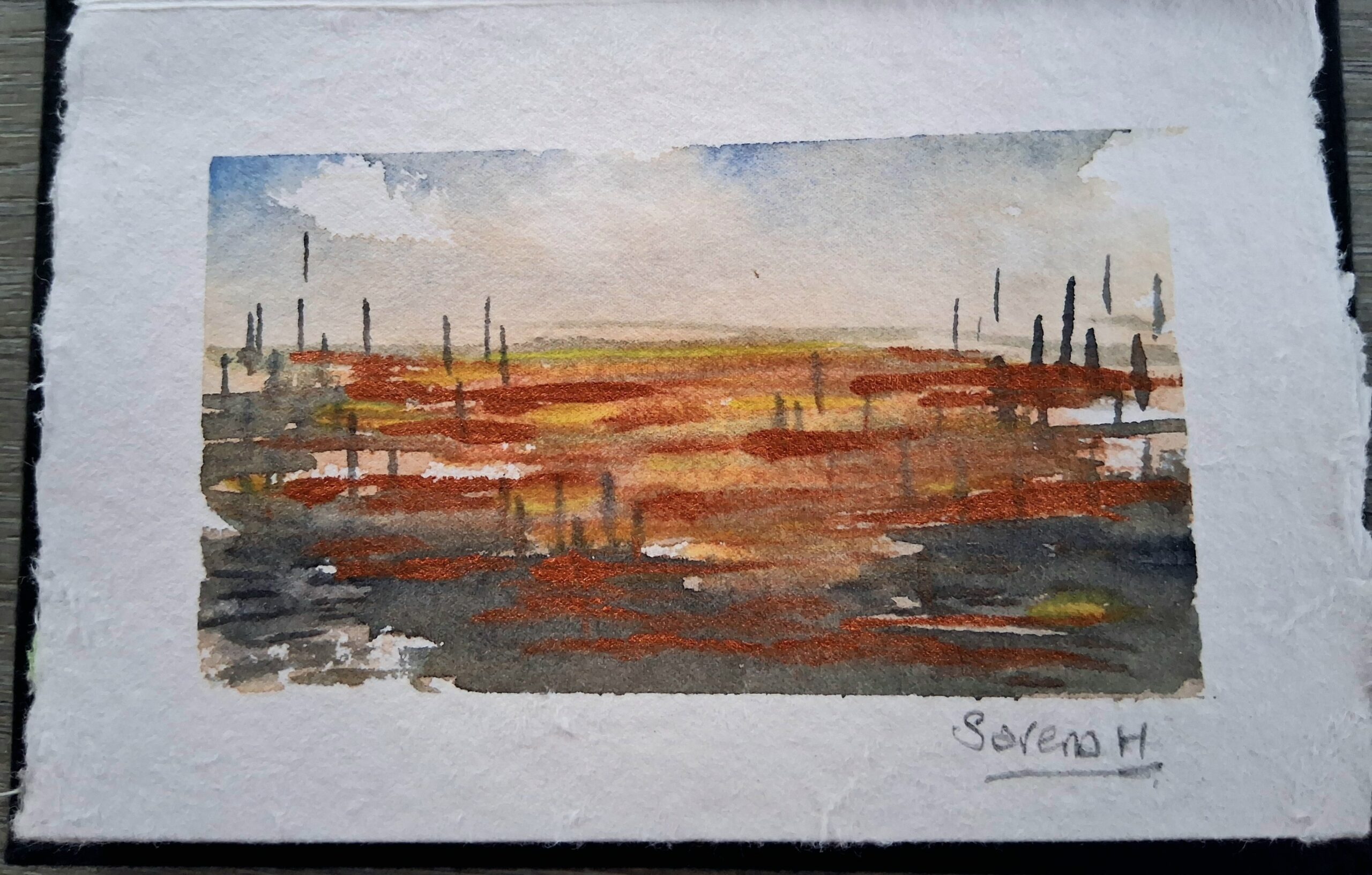
P.P.S No AI was used in the art image shown…
Search Posts
Categories
- Blog29
- Creativity1
- Gentle Yoga10
- Happiness4
- Health and Well-being9
- Health and well-being19
- Laughter2
- Mantra and chant18
- Mood Boosting16
- Mother nature1
- Music and Sound7
- Nepal0
- Positive Psychology3
- Pranayama breathing8
- Resilience10
- Retreat3
- Self-help14
- The Sound of Grace1
- Uncategorised12
- Yoga classes5
- yoga philosophy1